Getting lost in chichicastenango
When I told my Spanish tutor that I was planning a trip to Guatemala, she said the one thing I absolutely must do is visit Chichicastenango. I had never heard of Chichicastenango before but she described it as today’s hub for Mayan culture and traditions with a huge outdoor market, which definitely piqued my interest.
Today, Chichicastenango is home to the Quiche people, the largest Mayan group in Guatemala, and it’s one of the most traditional towns, where the Mayan culture has been strongly preserved. It is also notably where the Popol Vuh was discovered – the sacred text that describes the origin of the world, the creation of humans and animals, and the relationships between the deities, us, and the natural world, from the perspective of Mayan spirituality. The Popol Vuh was originally passed down orally, but the Mayans used a hieroglyphic form of writing long before the Europeans arrived. It wasn’t until the 1700s that Francisco Ximénez, a Franciscan priest, translated the text into Spanish, which became the basis for the English translation. This text is integral to the understanding of the Mayan civilization and their spiritual perspective, and it was discovered right here in Chichicastenango!
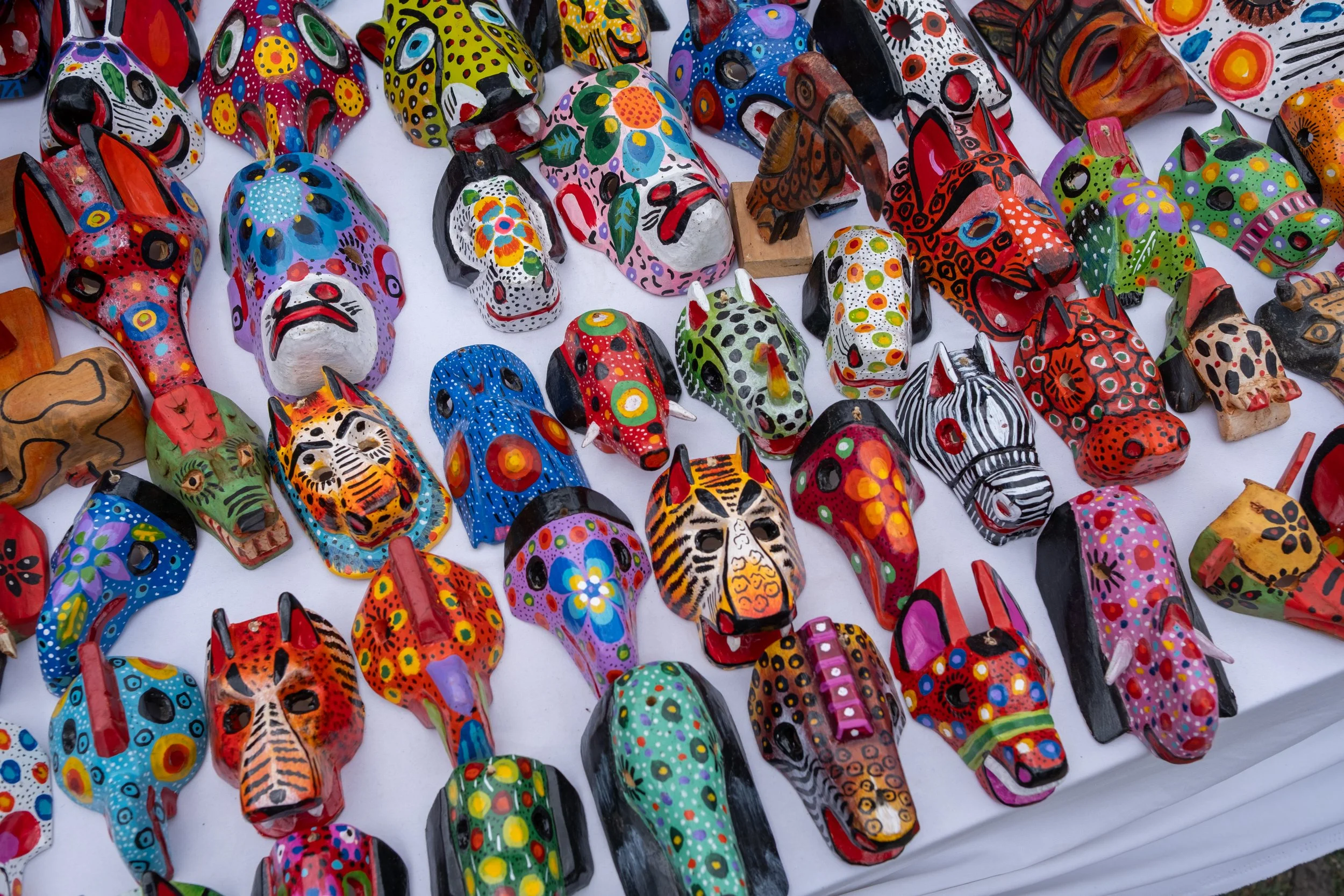
Hand painted masks at the market
One of the most unique aspects of the town is the explicit blending of Catholicism and Mayan traditions. It’s an excellent example of the syncretism we see in Guatemala today. There are several Catholic churches where Mayan traditions and spiritual practices are still being performed. The main church is the Iglesia de Santo Thomas, built around 1540-1545 AD. Here, you can find Quiche priests burning candles, incense, and performing rituals with Mayan altars on the steps. Directly across from the Iglesia de Santo Thomas is the Iglesia de la Capilla del Calvario del Señor Sepultado, which was also constructed around 1540 AD. The two churches were built mirroring each other to symbolize the connection between the underworld and the living, and to honor their ancestors.
Chichicatenango is also home to one of the most colorful cemeteries in the world, another reflection of the blending of Christian and Mayan beliefs. The various colors on the graves carry a different meaning: white for fathers, which symbolizes purity, turquoise for mothers, which symbolizes protection, yellow for grandparents to indicate the protection of the sun, and pink and blue for girls and boys.
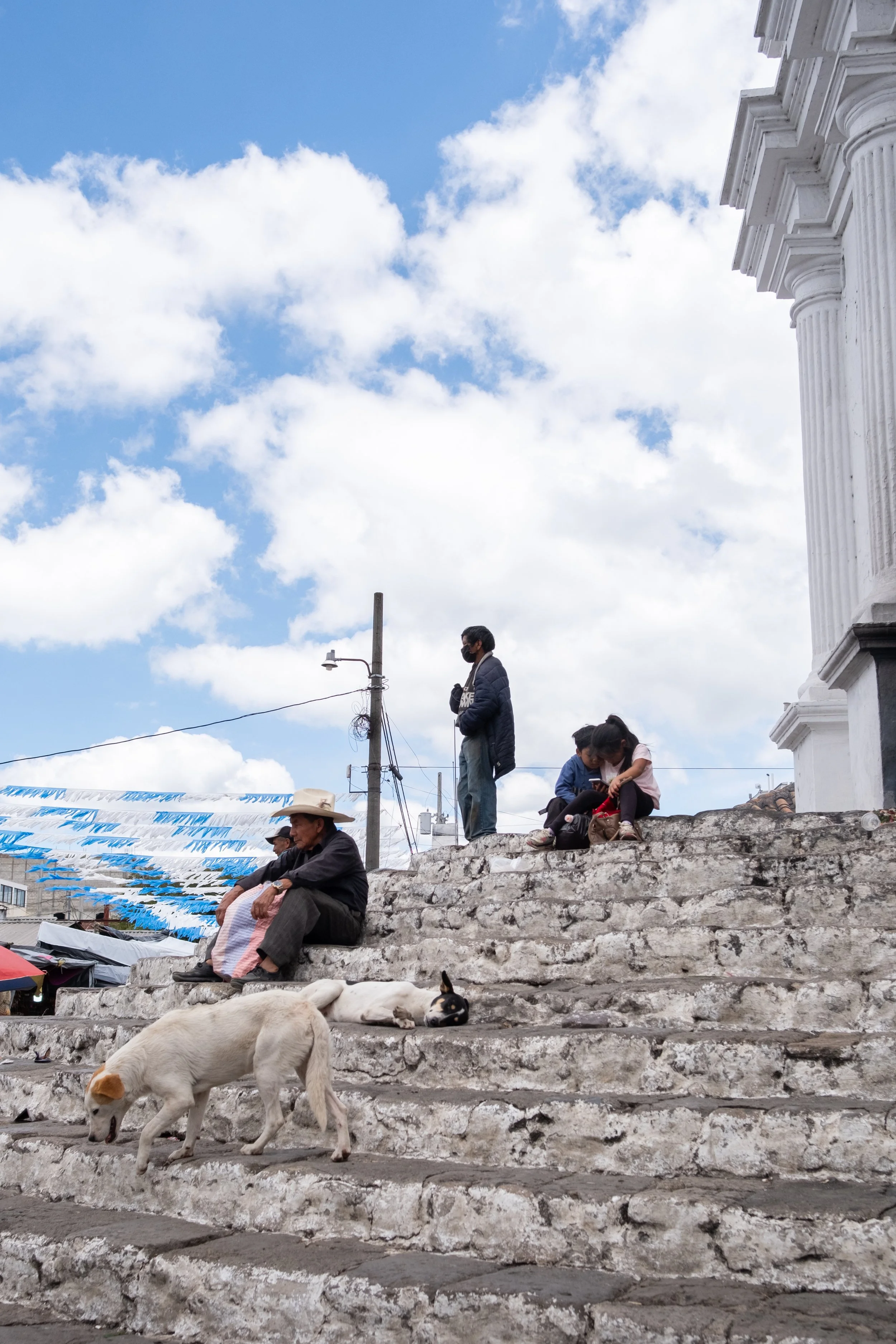
Dogs and locals outside of the Iglesia de Santo Thomas
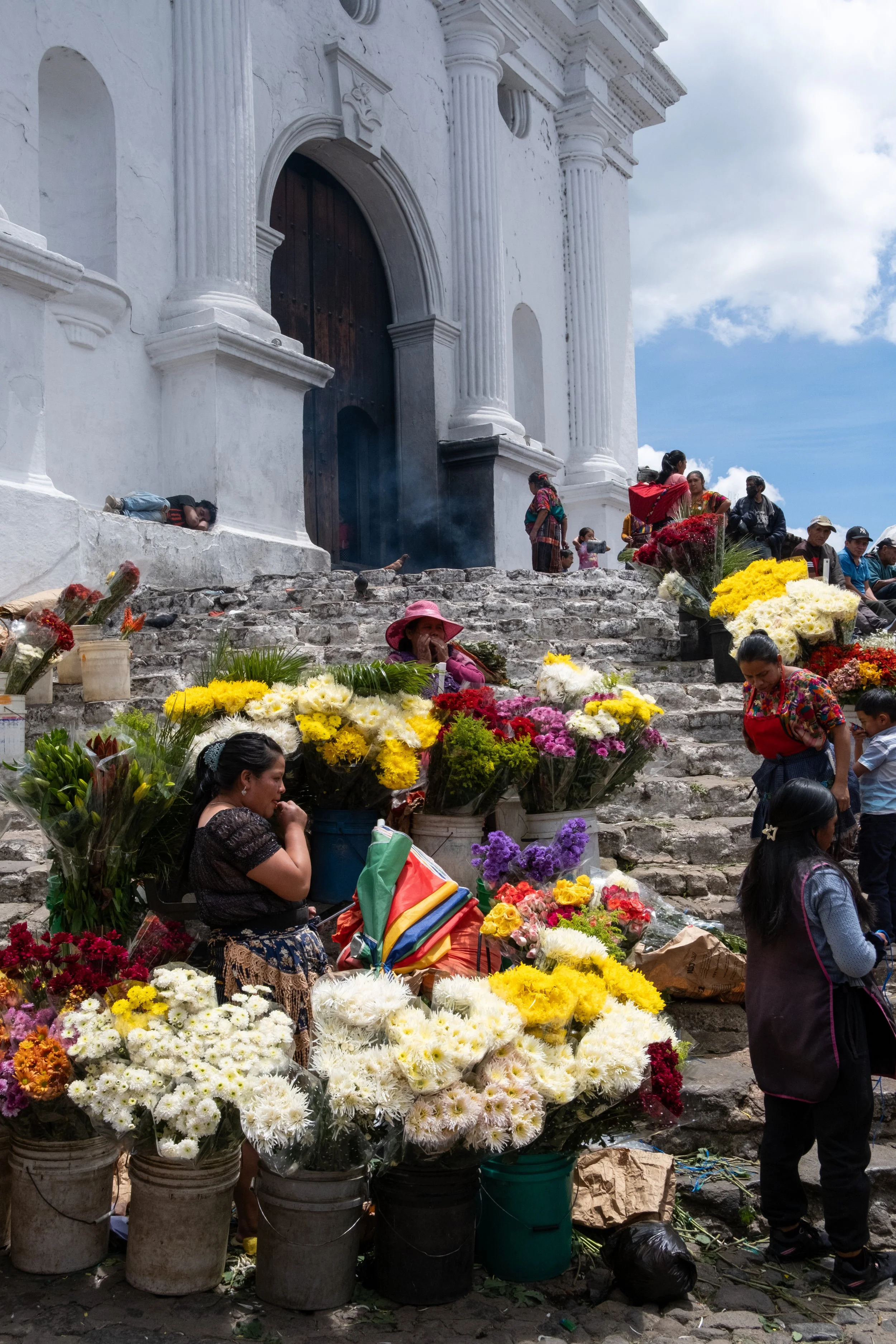
Flower vendors outside of the Iglesia de Santo Thomas
The biggest draw to the town however is the local market, which runs every Thursday and Sunday and is the largest indigenous market in Central America. They’ve got everything from Mayan fabrics and textiles, produce, flowers, and spices, to fresh tortillas, tchotchkes, leather goods, jewelry, shoes, and more. They even have modern electronics and skincare/haircare products. There’s vibrant, kaleidoscopic splashes of color everywhere you look – it’s hands-down the most colorful market I’ve ever been to! However, it is a maze. It’s really easy to get lost weaving through the various buildings and the small alleyways, so I’d recommend going slow and taking your time.
In hindsight, I wish I had booked a proper tour with a tour guide so I could be given the historical context and the lay of the land. I had only booked transportation and to be honest, I felt quite overstimulated and overwhelmed. I didn’t even make it to the cemetery cause I had no idea it existed until after my trip! If you’re booking a tour online, make sure you book with transportation from the right location. There are several Chichicastenango tours with transportation from Antigua, Panajachel, and Guatemala City. I had booked my transportation with CA Travelers and had been in touch with Columbus Guatemala Travels for tours as well, who were super helpful and great with communication. I’ll definitely be booking a tour with them next time!
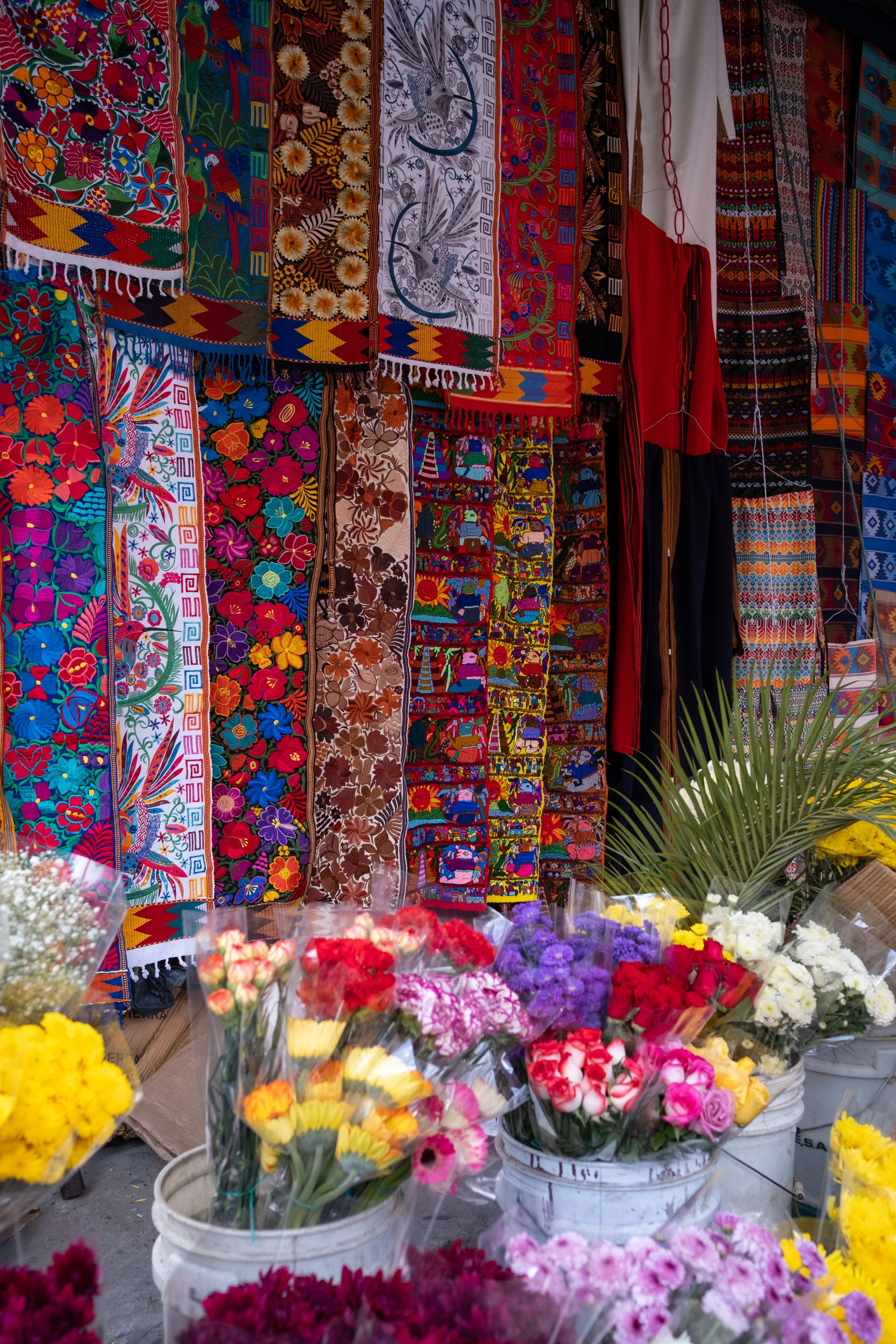
Mayan textiles and flowers at the market
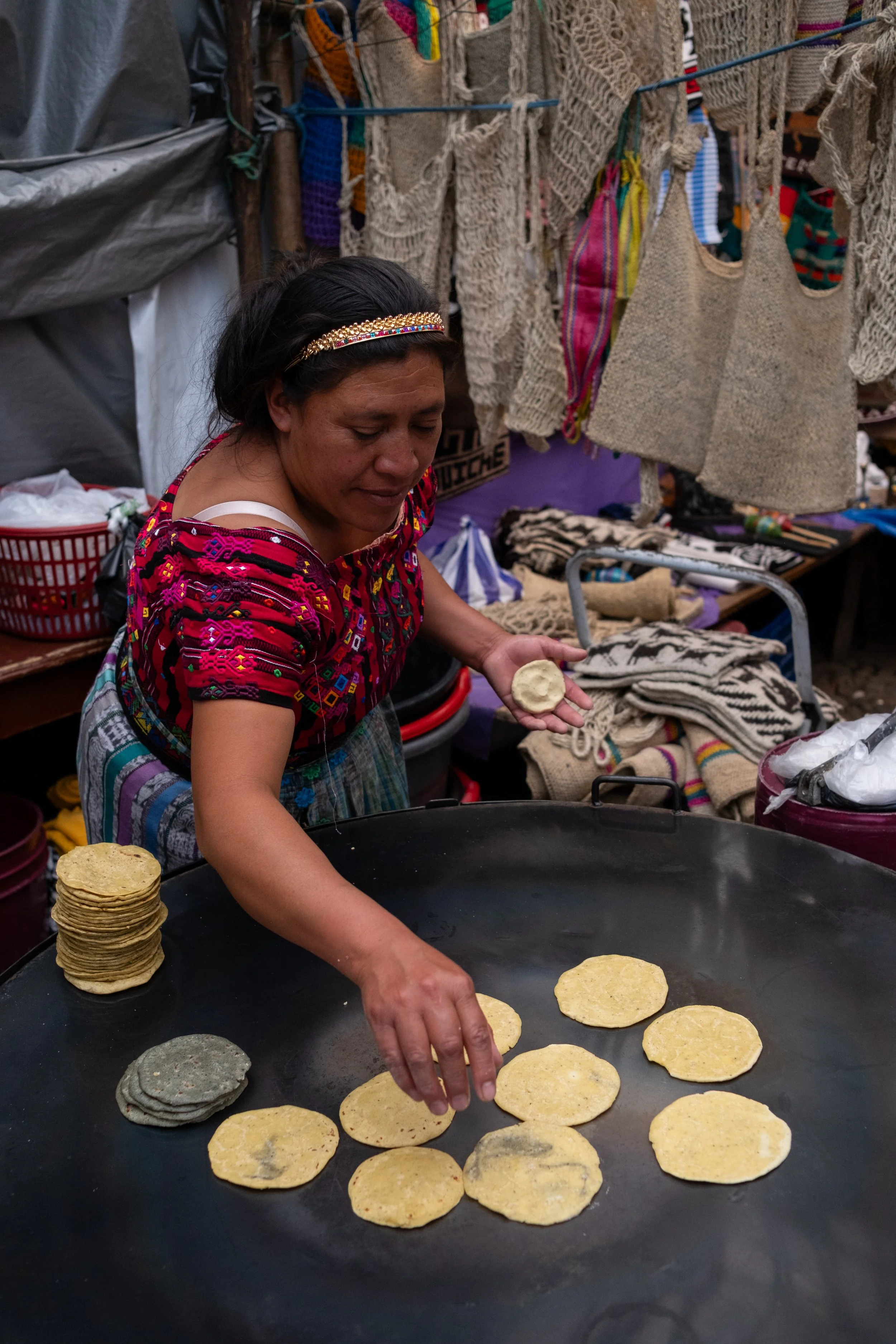
Tortilla vendor