Falling in Love with Mayan Culture in Antigua, Guatemala
Few experiences in my life have left me feeling as deeply connected to humanity and Mother Nature as I did on my very first day in Antigua, on a walking tour of the town. And thank God for this tour because it helped color the rest of my trip and gave me a much deeper understanding of Guatemala’s beautiful people, traditions, and culture from day one.
Before my trip, I had very limited knowledge of Mayan culture, so I went in with a curious, open mind and a readiness to learn. This tour is not told through the perspective of the Spanish POV, which is what drew me to it in the first place. I booked this walking tour specifically because it explores Antigua through the lens of Mayan traditions pre and post-colonization. My tour guide, Wilson, was incredibly knowledgable and passionate about being Mayan and we spent a lot of time talking about what preserving the culture looks like today after facing so much adversity and erasure throughout history.
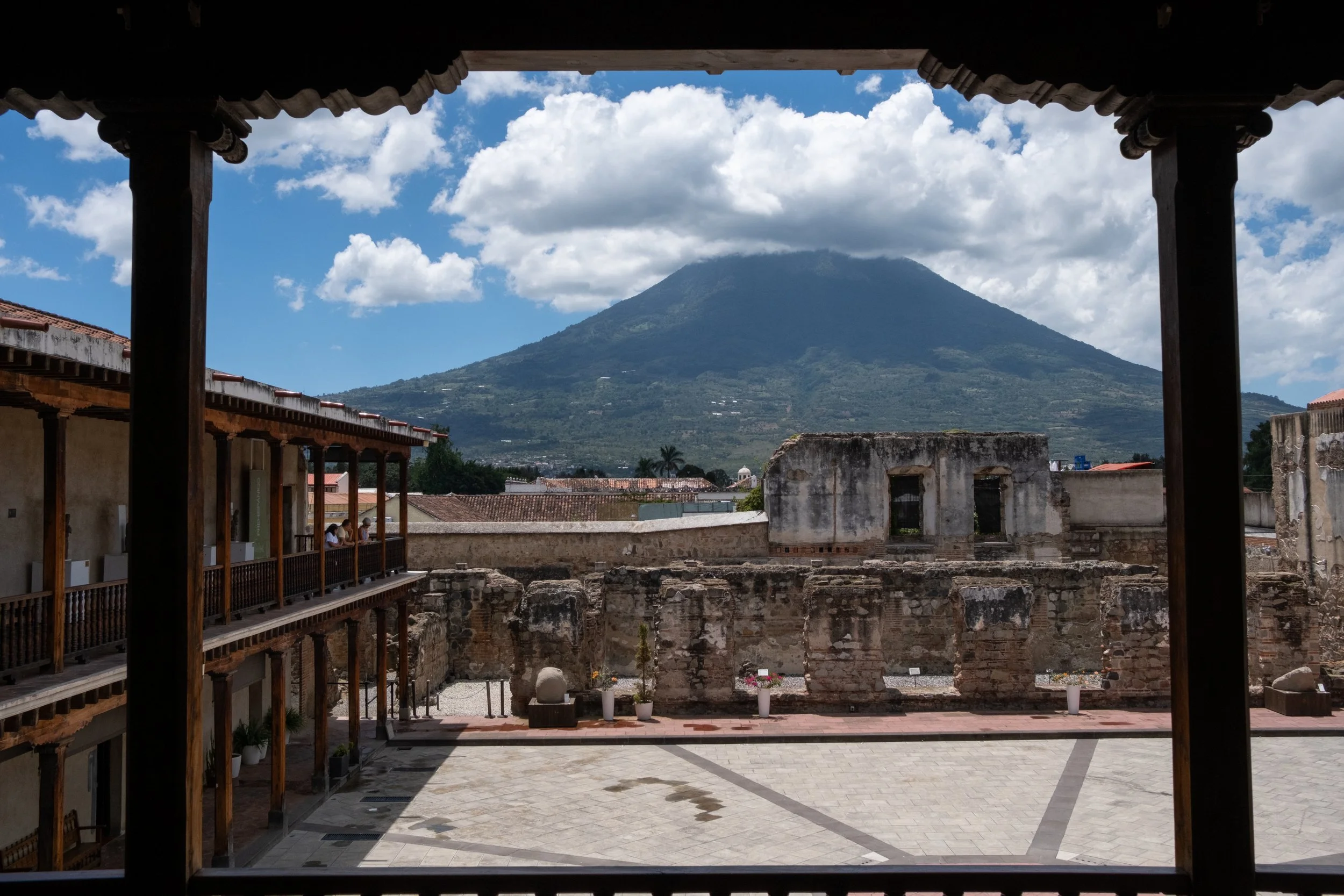
View of Volcan Fuego from the Museo Nacional de Arte de Guatemala
The thing that resonated with me the most is the Mayan philosophy of living in balance and harmony with nature. We aren’t here to control it or have dominion over it, we are an integral part of it. When they’d kill an animal or cut down a plant, the Mayans would say a prayer to give thanks for its sacrifice. Wilson demonstrated by cutting a piece of fiber from an agave plant to show me what they used to make ropes. As he recited his prayer, I felt a well of emotion rise up in me thinking about the state of our world and the environment. When did we become so disconnected from our roots and Mother Earth? It became clear to me that it’s more important than ever for us to turn to ancestral wisdom, as this respect and reverence for the natural world is prevalent across many Indigenous communities. We have so much to learn, and in a way, it feels like a homecoming — a return to what we’ve always known.
Nature is an integral part of Mayan rituals. Even with their altars, they must be built outside under the sky. We stopped at the top of Cerro de la Cruz (it’s a bit of a walk outside of the city and up a hill, but it’s so worth it for the view of the volcano!) where Wilson showed me how to build a Mayan altar. They use fresh flowers, colorful candles, and herbs, and every aspect of the altar has a specific meaning. Our spirit represents the sky, our bodies are the Earth, sunrise is life, while sunset represents death. Our life cycle, our humanity is interconnected with the elements around us and through this ritual, we cleanse our energy and pay respect to Mother Nature and our ancestors.
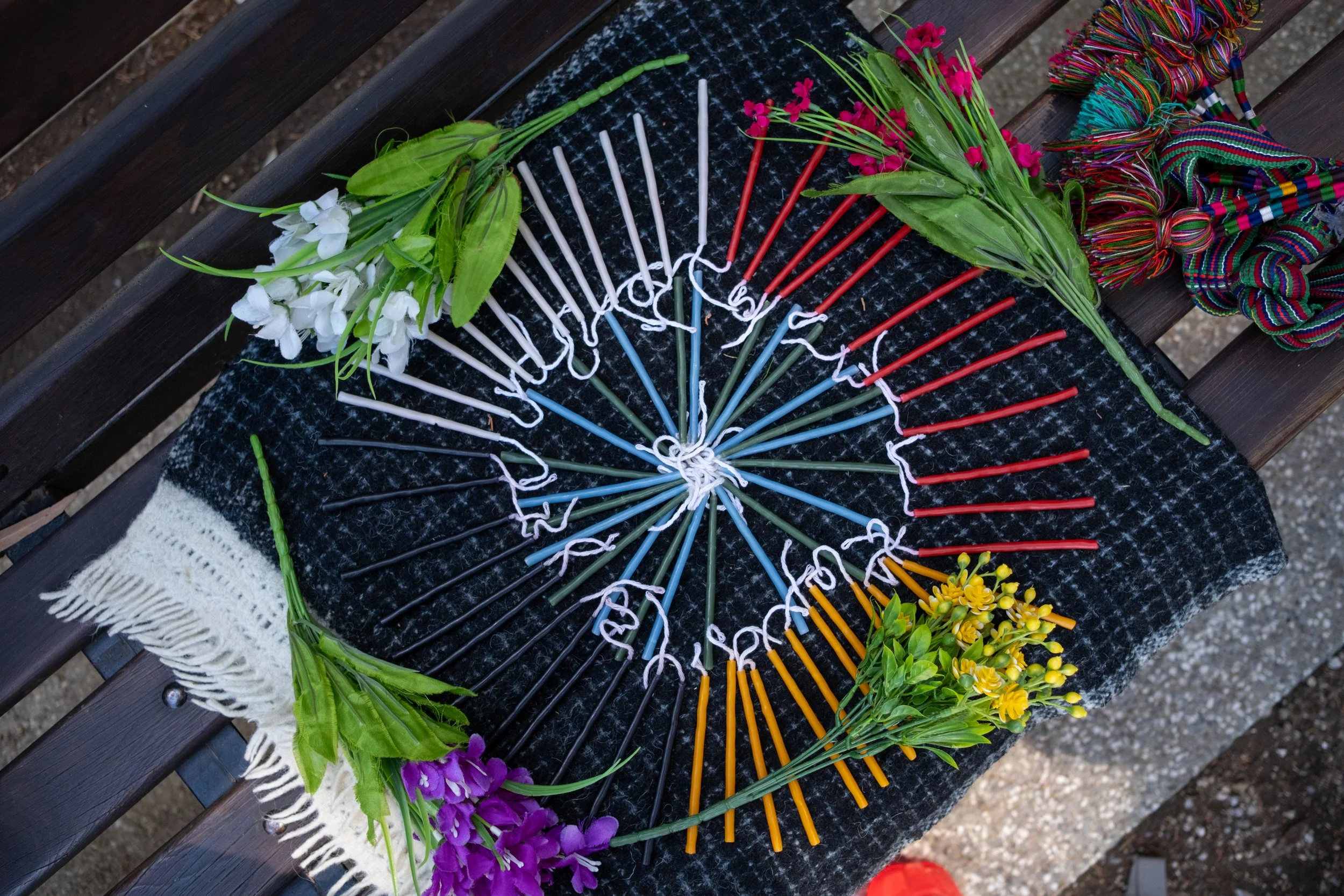
Mayan altar
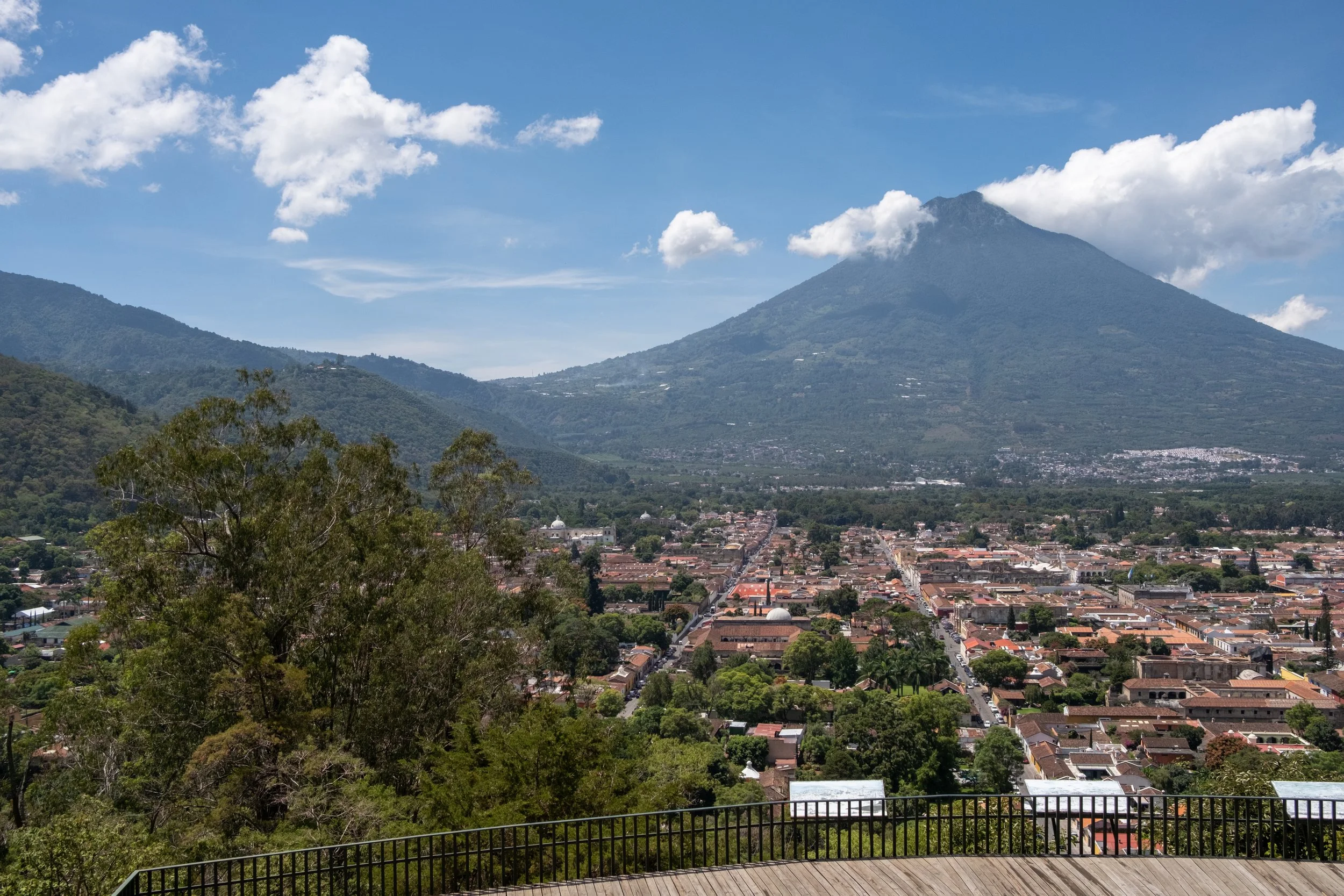
View of Volcan Fuego from Cerro de la Cruz
However, things changed when the conquistadors arrived in the 16th century. They looked at the spiritual practices of the Mayans and believed they were animals and satanists. They tried to erase their culture, they built churches directly on top of sacred Mayan sites using Mayan slaves, and the Mayans were given a choice: convert to Catholicism or die.
As someone of Native Hawaiian descent, this hit especially hard for me. During the colonization of Hawai’i, we also saw the erasure of our language, traditions, and spiritual practices. However, the Mayans found their own way to persevere and preserve their own culture. At one of our stops, we visited the Iglesia de la Merced in the middle of Antigua. You can’t miss it it, it’s bright yellow! Wilson explained that during the construction of churches across Guatemala, they found ways to hide Mayan symbols throughout the façades. He pointed out jaguars, the Mayan cross, cacao pods, and maize — the most important crop in Mayan culture and part of their origin story of human creation, hidden around the front of the church. Even the colors of the churches are typically one of the four sacred Mayan colors — yellow, white, red, or black. Through the adversity and struggle they faced, this is just one of the many ways they were able to safeguard their story.
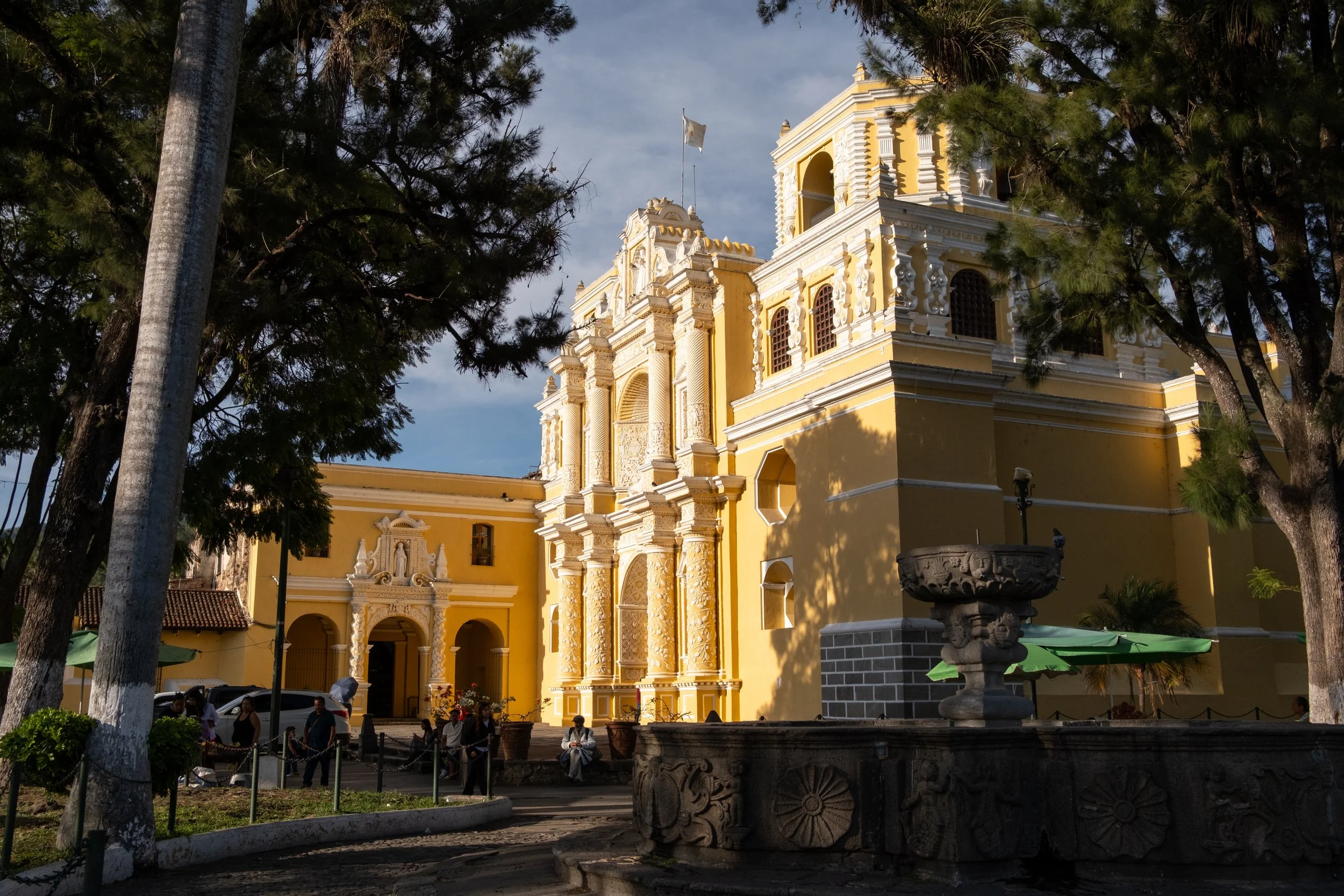
Iglesia de la Merced during dusk
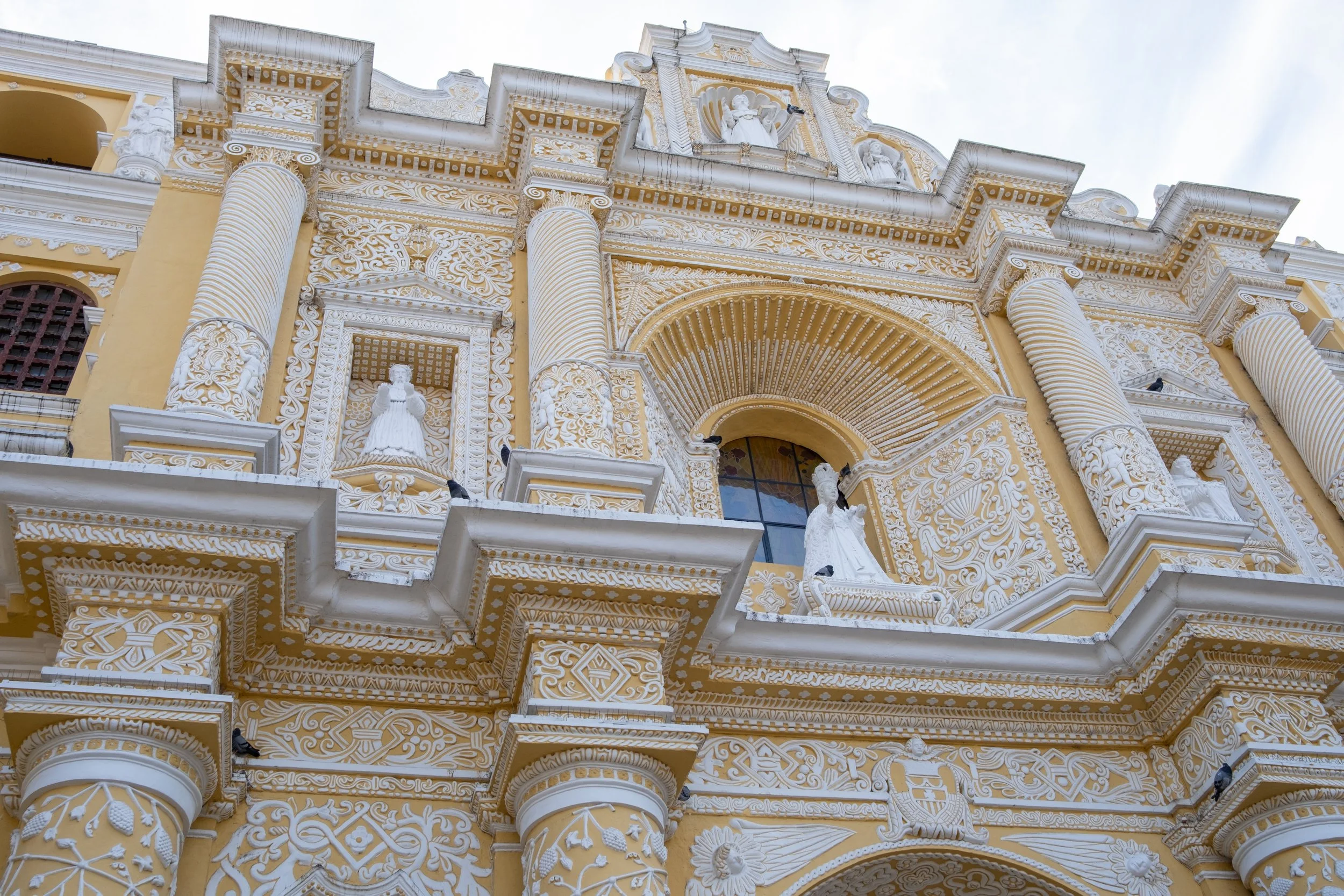
CU of the façade of the Iglesia de la Merced
Today in Guatemala, we see a unique syncretism, where Christianity and Mayan spirituality are so intertwined that they can no longer be separated. According to Wilson, the older generations would identify more so as Christians. However, even they pass down some traditions that they don’t even know are Mayan, like being buried facing the West because that’s where the sun sets and on a Mayan altar, West = death. Lately, there’s been a resurgence with the younger generation wanting to connect with their Mayan heritage, which I find absolutely beautiful.
Wilson closed the tour with the phrase “through it all, we’re still here,” and that’s when I almost cried like a baby. Learning about how the Mayan culture has not only lived on, but is being revived by a new generation brought tears to my eyes. God knows how many Indigenous cultures have been wiped out throughout history, but to see local women walk on the street wearing their colorful, traditional clothes, and to hear various Mayan dialects being spoken — it’s a powerful and beautiful testament to their resilience. This tour was such a strong reminder that Indigenous communities will persist and that their wisdom is essential if we are to survive in this world.
Thank you Wilson for sharing your knowledge and your passion with me! I’m so grateful.
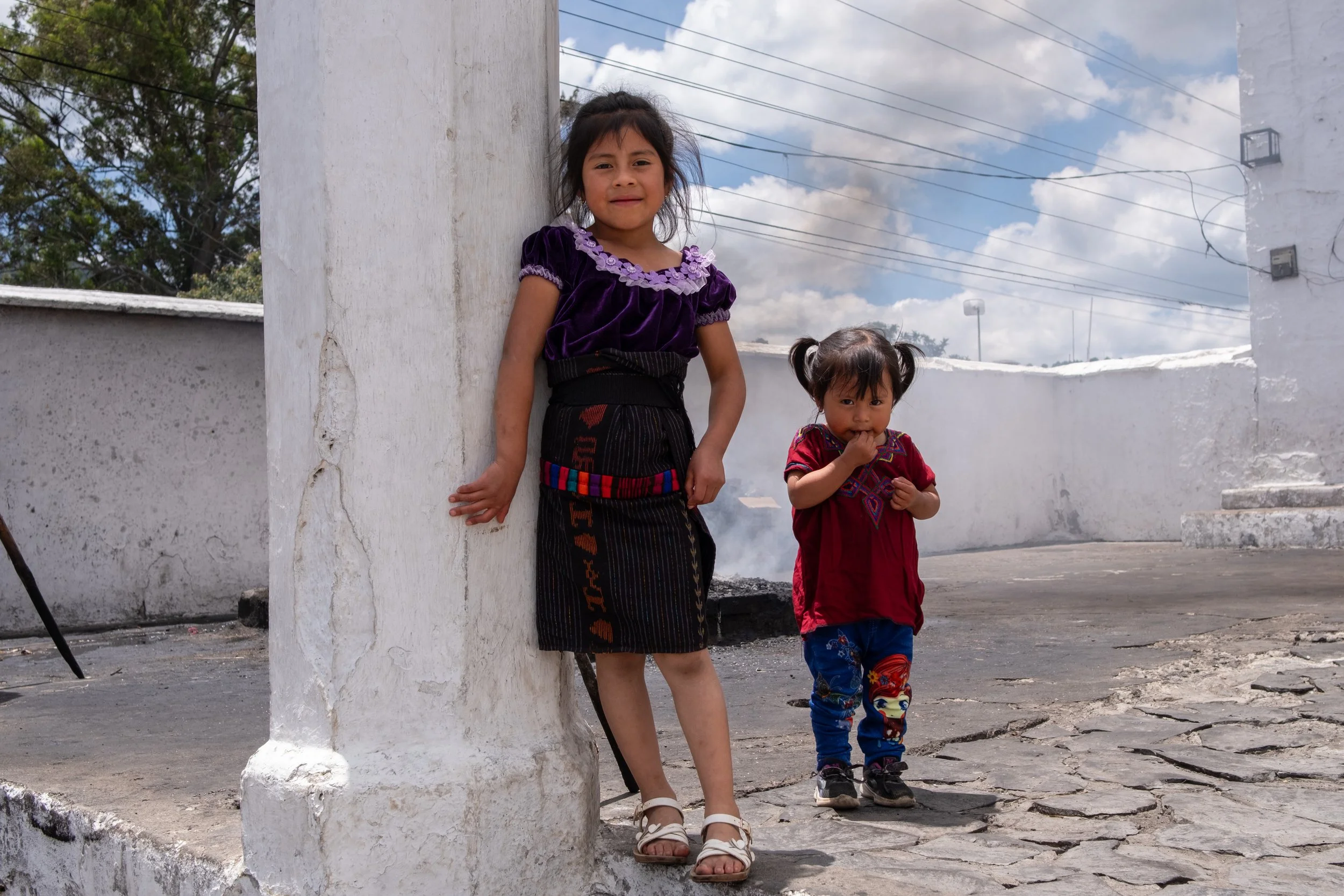
Children outside of Capilla del Calvario in Chichicastenango
If you’re in Antigua and interested in learning more about Mayan culture, I highly recommend taking Wilson’s tour. You can find it at this link: